Best Baby Toys For Brain Development
Toys For All Ages >> Toys>> Best Baby Toys For Brain Development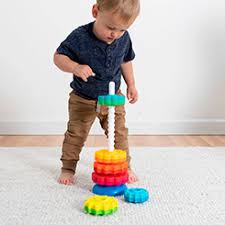
Best Baby Toys For Brain Development
Choosing baby toys that help brain development can feel a bit tricky for new parents. You want the best for your little one, but where do you even start with so many options out there? It’s totally normal to feel a little overwhelmed.
Don’t worry, though! This guide breaks it all down super simply. We’ll walk through exactly what to look for and how different toys can help your baby’s brain grow.
Get ready to discover some amazing toys that will make learning fun!
Key Takeaways
- Simple toys encourage imagination and problem-solving.
- Sensory toys help babies explore the world through their senses.
- Toys that involve stacking or sorting boost fine motor skills and logic.
- Books and puzzles introduce early literacy and critical thinking.
- Safe and age-appropriate toys are essential for healthy development.
Choosing Baby Toys That Help Brain Development
Selecting baby toys that help brain development is about more than just picking something colorful. It’s about finding items that encourage your baby to think, explore, and learn. These toys aren’t just for fun; they are tools that help build crucial connections in a baby’s rapidly growing brain.
When babies interact with the right toys, they are actively practicing skills that will serve them throughout their lives. This includes everything from understanding cause and effect to developing language and problem-solving abilities. The goal is to foster curiosity and a love for learning right from the start.
We’ll look at different types of toys and why they are so good for little minds.
The Importance Of Play In Early Childhood
Play is a baby’s full-time job! It’s how they make sense of the world around them. Through play, babies learn about objects, people, and themselves.
They discover how things work, like how pushing a button makes a sound or how dropping a toy means it will fall. This exploration is the foundation of all learning. When parents and caregivers engage with babies during play, it strengthens their bond and supports emotional development too.
This interaction is key to building a secure attachment, which is vital for a child’s well-being and future learning capabilities.
- Play helps babies develop physical skills.
- It also aids in social and emotional growth.
- Learning through play builds strong cognitive abilities.
When babies grasp, shake, and move toys, they are developing fine and gross motor skills. These movements help strengthen muscles and improve coordination. For example, a baby learning to stack rings is working on their hand-eye coordination and also developing an understanding of size and order.
This simple act is a powerful learning experience. Socially, when babies play with others, they start to learn about sharing and taking turns, even at a very young age. Emotionally, play allows babies to express themselves and manage feelings.
How Toys Support Cognitive Growth
Cognitive growth refers to how a baby’s brain learns to think, understand, and solve problems. Toys that support this are designed to challenge babies just enough to encourage them to figure things out. Think about a puzzle.
A baby has to look at the pieces, figure out where they fit, and then manipulate them to complete the picture. This process builds their reasoning skills and spatial awareness. These toys offer opportunities for babies to experiment and learn from their actions.
The more they try, the more they learn, and the more confident they become in their abilities.
A good example is a cause-and-effect toy. When a baby presses a button and a light flashes or a sound plays, they learn that their action caused something to happen. This is a fundamental concept that underpins much of their later learning.
Recognizing these patterns helps them predict outcomes and understand how the world operates. This early grasp of cause and effect is incredibly important for developing logical thinking and problem-solving skills. It makes them curious to see what else they can make happen.
Sensory Exploration Toys
Babies explore the world primarily through their senses: sight, sound, touch, taste, and smell. Sensory toys are designed to stimulate these senses in safe and engaging ways. Textured balls, soft plush toys, rattles with different sounds, and crinkle books all offer unique sensory experiences.
These toys help babies develop their sensory processing abilities, which is crucial for learning and development. A baby touching a soft fabric learns about texture, while hearing a gentle rattle learns about sound and cause and effect. This sensory input helps build more neural pathways in their brain.
- Tactile toys help babies learn about different textures.
- Auditory toys introduce them to various sounds and rhythms.
- Visual toys capture their attention and aid in tracking.
For instance, a baby might enjoy a set of soft blocks with different textures like smooth, bumpy, or fuzzy. As they touch and mouth these blocks (safely, of course!), they are gathering information about their physical properties. This tactile exploration is fundamental to understanding the physical world.
Similarly, musical toys that produce gentle melodies or different instrument sounds help babies develop their auditory discrimination skills. They start to recognize patterns in sounds and associate them with actions, which is a step towards understanding language.
Consider a baby encountering a crinkle book. The unique sound and feel of the pages provide a rich sensory experience that captures their attention. This engagement helps them focus and learn to associate sounds with visual stimuli.
Such toys are excellent for developing early language skills as well, by encouraging vocalizations and interaction. The variety of sensory inputs helps wire the brain to process information more effectively, preparing them for more complex learning tasks as they grow older.
Toys For Fine Motor Skill Development
Fine motor skills involve the small muscles in the hands and fingers. These skills are essential for everyday tasks like eating, dressing, and eventually writing. Toys that require manipulation, such as stacking rings, shape sorters, and simple puzzles, are fantastic for developing these skills.
Babies practice grasping, releasing, and coordinating their movements. This builds dexterity and prepares them for more complex tasks later on. Each successful manipulation is a small victory that builds confidence.
Stacking cups or rings is a classic example. A baby has to pick up each ring, orient it correctly, and place it on the post. This requires precise control of their fingers and hands.
Initially, they might knock the stack over, but with practice, they learn to place them more carefully. This repeated action strengthens the small muscles in their hands and improves their hand-eye coordination. It’s a playful way to build the foundation for writing and drawing.
- Shape sorters help with hand-eye coordination and problem-solving.
- Stacking toys build an understanding of size and sequence.
- Activity cubes offer multiple opportunities for grasping and manipulating objects.
An activity cube is a wonderful toy that often combines several fine motor challenges. One side might have gears to turn, another may have beads to slide along a wire, and yet another could feature buttons to push. Each activity requires different finger movements, promoting a wide range of fine motor skill development.
Babies learn to use their fingers and thumbs in opposition, a key skill for grasping and manipulating objects. This variety keeps them engaged while building essential dexterity.
Toys Promoting Cognitive And Problem-Solving Skills
Toys that encourage thinking and figuring things out are invaluable for cognitive development. These include puzzles, shape sorters, nesting toys, and simple building blocks. They present babies with a challenge, and when they solve it, they experience a sense of accomplishment.
This positive reinforcement encourages them to tackle new problems. These toys help babies understand concepts like size, shape, color, and spatial relationships. They learn to observe, analyze, and experiment to find solutions.
A simple shape sorter is a great illustration. The baby sees holes of different shapes and corresponding blocks. They have to identify the shape of the block and then find the matching hole.
This involves visual discrimination, spatial reasoning, and motor planning. When they finally get a block into the correct hole, they’ve solved a problem. This success reinforces their learning and motivates them to try the next shape.
It’s a gentle introduction to logical thinking.
Here is a comparison of how different toys support cognitive growth:
| Toy Type | Cognitive Skill Developed | Example Activity |
|---|---|---|
| Stacking Rings | Understanding size, sequence, and cause and effect | Placing rings from largest to smallest on a pole. |
| Shape Sorter | Shape recognition, problem-solving, and fine motor skills | Matching geometric shapes to their corresponding holes. |
| Building Blocks | Spatial reasoning, creativity, and problem-solving | Stacking blocks to create towers or simple structures. |
| Simple Puzzles | Visual discrimination and problem-solving | Fitting large puzzle pieces together to form a picture. |
For instance, a baby who regularly plays with building blocks learns about balance and gravity. They discover that if they stack blocks too high or unevenly, their tower will fall. This teaches them about physical principles through hands-on experimentation.
They also begin to understand how shapes fit together to create larger structures, which is a precursor to more advanced spatial reasoning. The repetitive nature of building and rebuilding helps solidify these concepts.
Encouraging Language And Communication Through Toys
While not all toys are directly language-based, many indirectly support language development. Books are a prime example. Reading to a baby exposes them to new words, sounds, and sentence structures.
Even before they can speak, babies are absorbing language. Soft books with textures, bright pictures, and simple rhymes are excellent for this. Toys that encourage interaction, like dolls or stuffed animals, can also be used to create pretend scenarios and promote babbling and early vocalizations.
Talking to your baby about the toys they are playing with is also key.
- Board books with large pictures introduce new vocabulary.
- Puppets can make storytelling and vocalization more engaging.
- Talking about the toy’s features during play expands language.
Consider a baby playing with a set of animal figures. As they hold and move the animals, you can narrate what the animals might be doing or saying. You can make animal sounds and encourage your baby to imitate them.
This back-and-forth interaction is the essence of early communication development. Even simple imitation of sounds builds vocal control and helps them understand the connection between sounds and meaning. This builds a foundation for understanding and using language.
A study published in the journal “Child Development” found that the quantity and quality of parent-child talk during play were strongly linked to children’s language skills later on. This highlights how crucial interactive play is. When parents describe actions, ask simple questions, and respond to their baby’s babbles, they are creating a rich language environment.
Toys are the props for this learning, making abstract concepts more concrete for the baby.
Safety Considerations For Baby Toys
Safety is always the number one priority when choosing any toy for a baby, especially baby toys that help brain development. Babies put everything in their mouths, so toys must be made from non-toxic materials and be large enough not to be a choking hazard. Check for small parts that could break off.
Look for toys that are age-appropriate. A toy designed for a toddler might be too complex or unsafe for an infant. Always inspect toys regularly for damage and discard any that are broken or have loose parts.
Certifications like ASTM or CE indicate that a toy meets safety standards.
For example, a rattle should have a sturdy handle that a baby can grip without it breaking, and the small parts inside should be securely contained. If a rattle breaks and the small beads spill out, they become a serious choking risk. Similarly, a plush toy should have securely attached eyes and nose, not ones that can be easily pulled off and swallowed.
Understanding these risks ensures you select toys that support development without compromising your baby’s safety.
Here are some key safety points to remember:
- Check for age recommendations on packaging.
- Ensure toys are made from safe, non-toxic materials.
- Avoid toys with small parts that can detach.
- Inspect toys regularly for wear and tear.
- Always supervise playtime, especially with new toys.
A report from the Consumer Product Safety Commission (CPSC) in the United States shows that while toy-related injuries have decreased over the years due to better standards, vigilance is still necessary. Many reported incidents involve small parts, strangulation hazards from cords, or toxic materials. Therefore, understanding the specific risks associated with different types of toys and different age groups is essential for every parent and caregiver.
Common Myths Debunked
Myth 1: Expensive toys are always better for brain development
Reality: Many of the most effective baby toys that help brain development are simple and inexpensive. Think about everyday objects like cardboard boxes, sturdy spoons, or soft cloths. These can spark incredible creativity and learning.
The key is how the baby interacts with the toy and the engagement they have with a caregiver, not the price tag. Overly complex electronic toys can sometimes limit imaginative play by doing too much for the child.
Myth 2: Babies need lots of toys to learn
Reality: Having too many toys can actually be overwhelming for a baby and lead to less focused play. A few well-chosen, versatile toys that can be used in multiple ways are often more beneficial. It’s the quality of interaction and play, rather than the quantity of toys, that truly drives development.
Rotating toys can also keep things fresh and engaging without needing a huge collection.
Myth 3: Only toys specifically labeled for “brain development” are effective
Reality: While some toys are marketed with specific developmental claims, many ordinary toys offer significant benefits. A simple ball helps with rolling and chasing, which develops gross motor skills and object permanence. A set of wooden blocks encourages stacking and balancing, fostering spatial reasoning.
The emphasis should be on open-ended play and toys that allow for exploration and imagination, regardless of their labeling.
Myth 4: Babies should be actively taught using toys
Reality: For babies, learning is most effective through exploration and guided play, not formal instruction. While caregivers play a vital role in facilitating learning by talking about toys and offering simple challenges, babies need freedom to experiment and discover on their own. The best approach is to provide opportunities for play and be present to support and engage, rather than direct every action.
Frequently Asked Questions
Question: What is the most important factor when choosing baby toys that help brain development?
Answer: Safety is the absolute most important factor. Toys must be non-toxic, free from choking hazards, and age-appropriate to ensure a baby can play and learn without risk.
Question: Should I buy electronic toys for my baby?
Answer: Electronic toys can offer some benefits, like introducing sounds and lights, but they should not be the primary focus. Open-ended, simple toys often encourage more creative and imaginative play, which is vital for brain development.
Question: How do I know if a toy is too advanced or too simple for my baby?
Answer: Look at your baby’s reaction. If a toy frustrates them, it might be too advanced. If they quickly lose interest or can do everything with it in seconds, it might be too simple.
Toys that offer a little challenge but are achievable with a bit of effort are ideal.
Question: How often should I rotate my baby’s toys?
Answer: Rotating toys every few weeks or months can help keep your baby engaged and prevent them from becoming bored with their playthings. It also allows them to rediscover toys with fresh eyes.
Question: Can play mats contribute to brain development?
Answer: Yes, play mats with different textures, colors, and attached toys offer wonderful sensory and visual stimulation for babies. They also provide a safe space for tummy time, which is crucial for motor skill development.
Conclusion
Picking baby toys that help brain development is all about choosing safe, simple items that encourage exploration. Toys that let babies touch, see, and hear different things are great. Things that let them stack, sort, or build also teach them important skills.
Remember that your interaction during play is just as important as the toy itself. Simple toys provide the best opportunities for your baby to learn, imagine, and grow their amazing little minds.
Related Post
Best Baby Toys for 12 to 24 Months Old
Finding the right playthings for your little one can feel like a puzzle. Especially when…